

Miniaturen zum Koran. Berlin: Brandus’sche Verlagsbuchhandung,
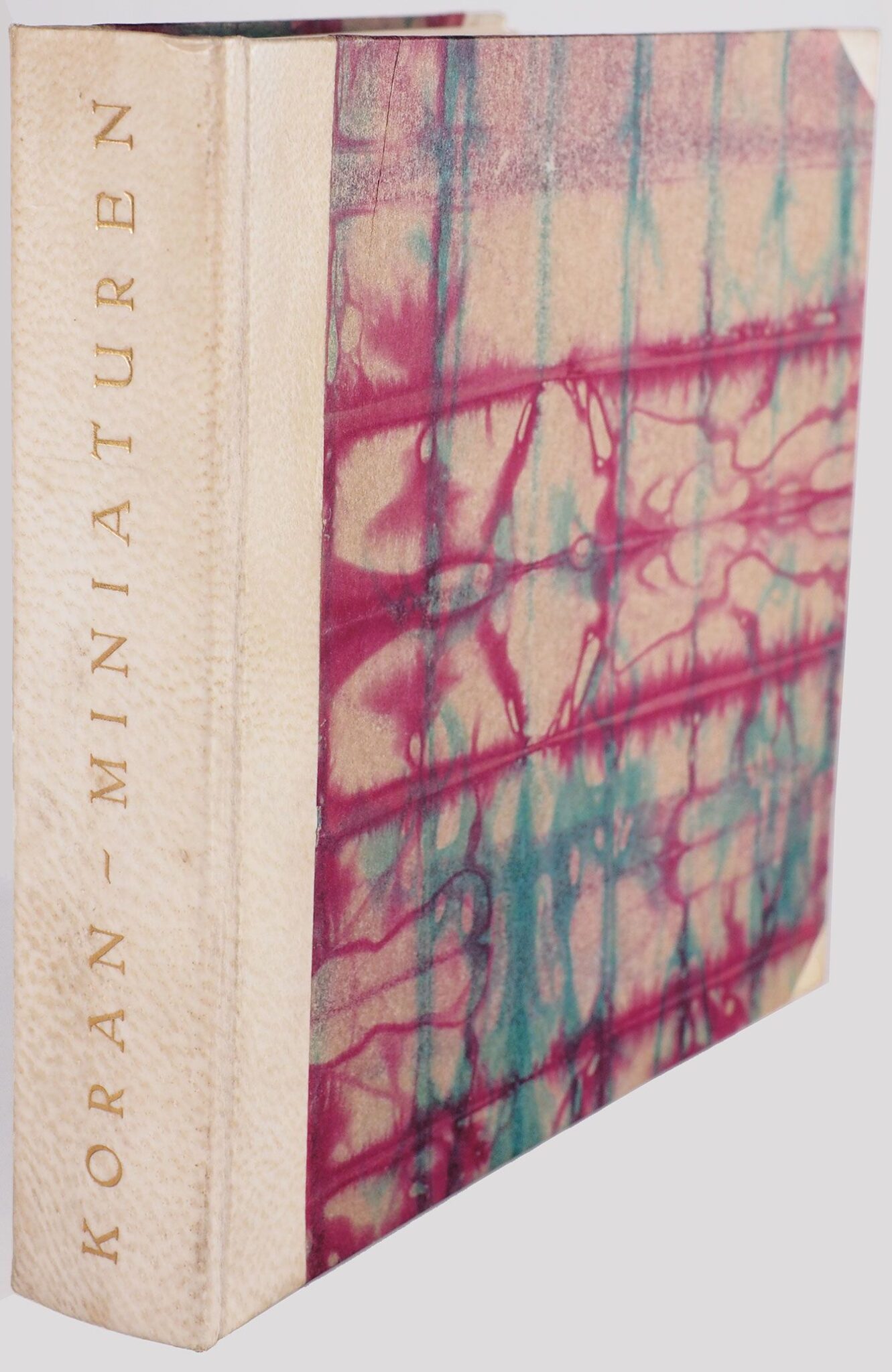
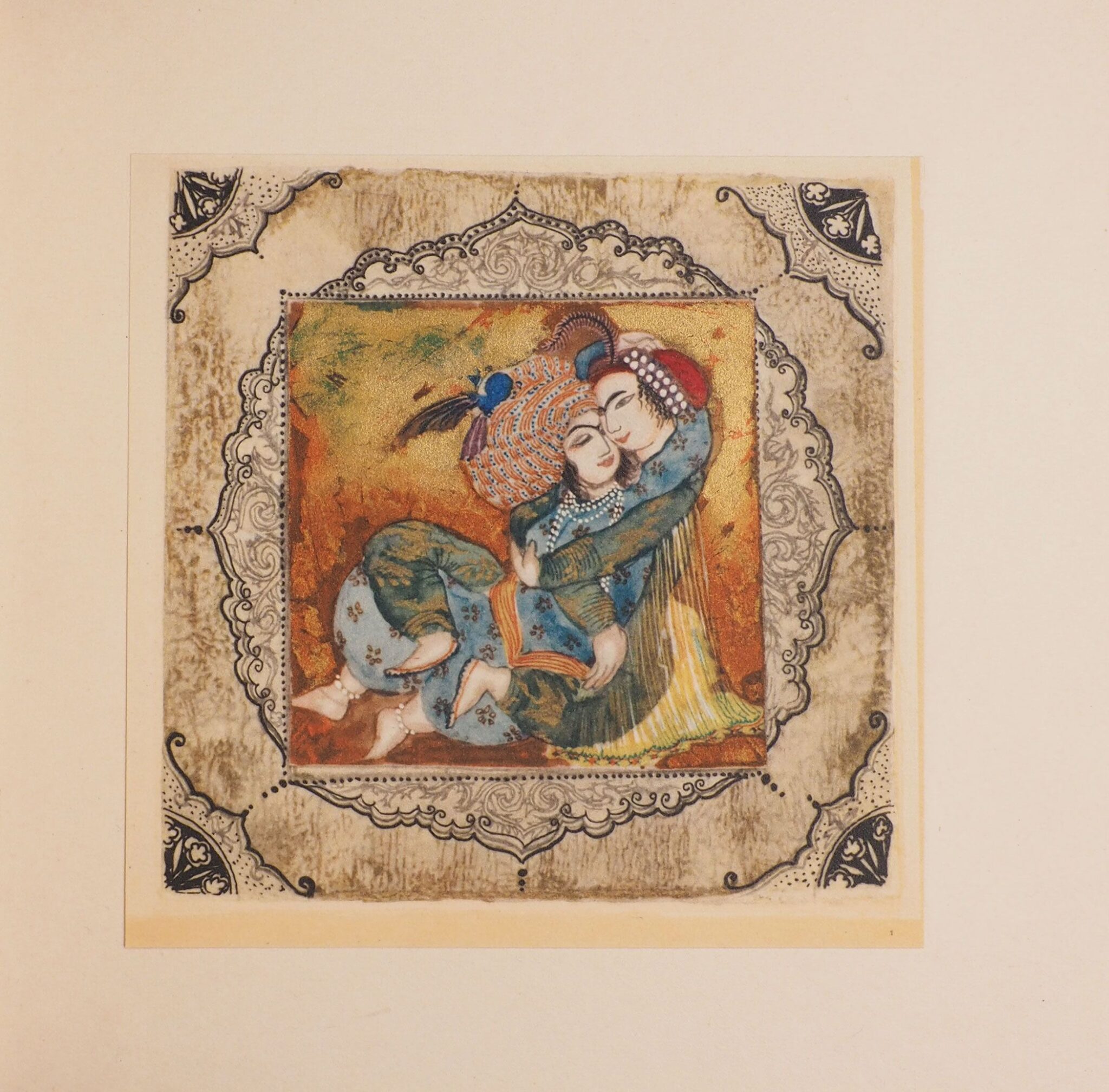
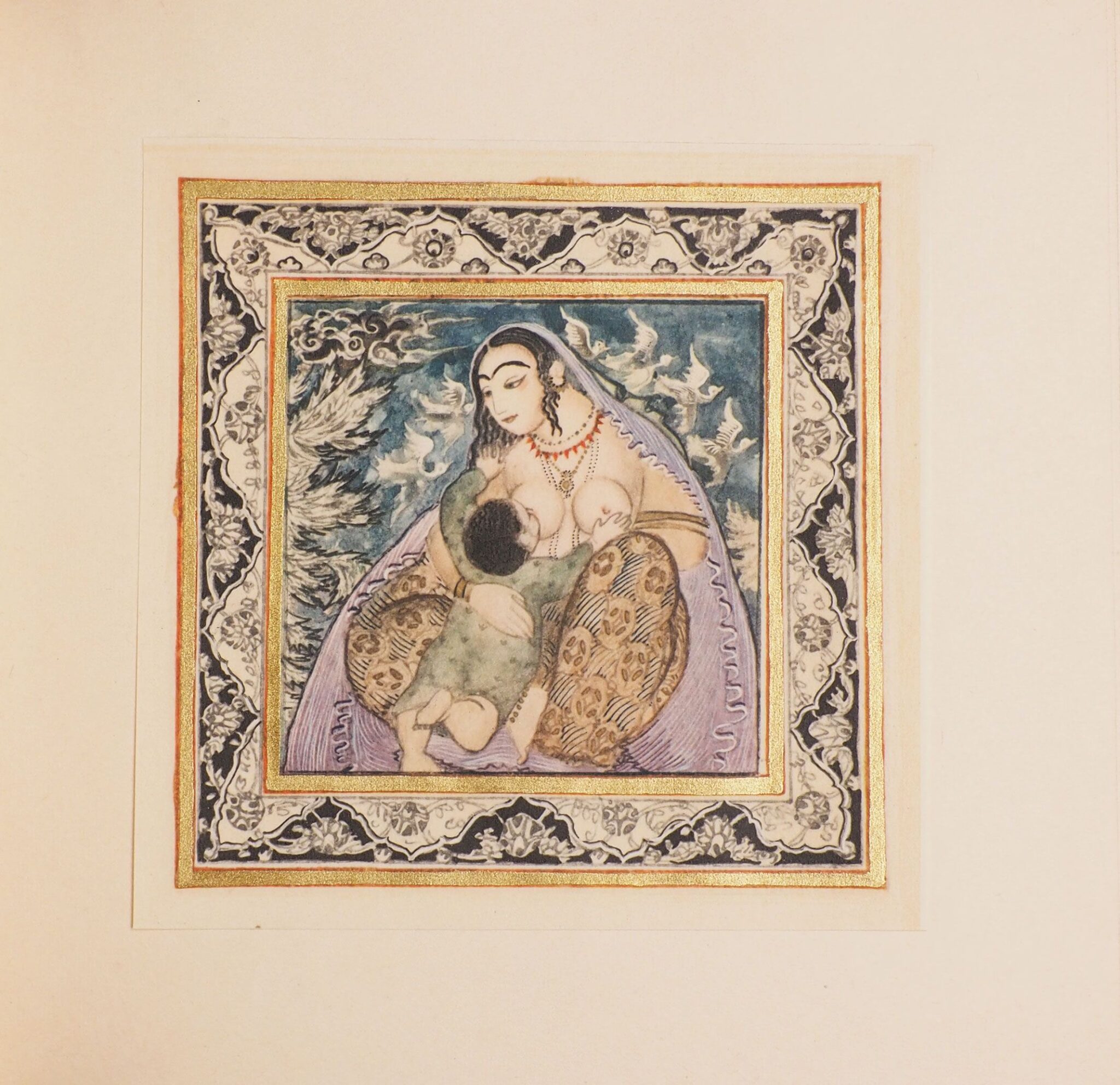
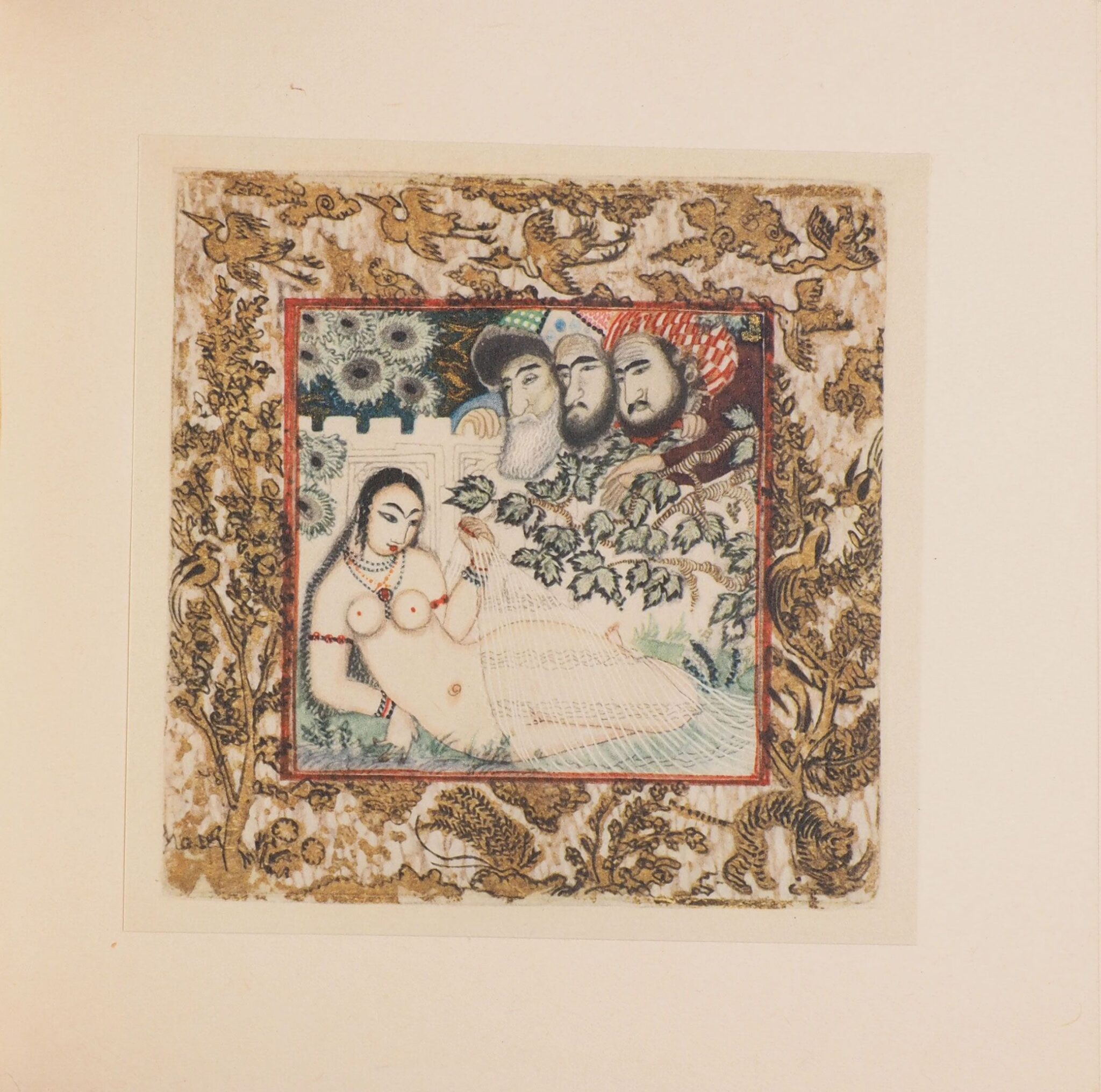
Berlin: Brandus’sche Verlagsbuchhandung [1924]. Small square 4to (160 × 158 mm), pp. [4], 42 mounted colour printed plates, [4], each plate with window mount guards and letterpress explanations to their verso. Original half vellum with decorative marbled/pastepaper boards and matching slipcase. Spine slightly soiled, slipcase worn at extremities, but a very good copy. First edition of Lydis’s exquisite illustrations for selected passages from the Qur’an, inspired by Persian miniatures. The plates, in colours and gold ink, were printed by Ganymed in Berlin, the text by Poeschel & Trepte in Leipzig. The book is known with several variant publishers’ bindings, and is here in its most striking form, with a vellum spine and marbled paper covers and slipcase (resembling Rorschach tests). The Qur’an, and the miniatures Lydis created from it represent a Damascene moment in the artist’s career. They were reproduced here from her originals painted on vellum, made while she was still living in a villa outside Athens with her second husband, Jean Lydis. They were almost certainly made before the illustrations for Der Mantel der Träume (1922, item 1 above) even though published after. She later recalled their inception: ‘One day I found a copy of the Koran in the bookshop, and absorbed in reading it, finding it so full of wisdom, I suddenly decided that I had to illustrate it. Today I realise the audacity of that decision: I had no experience, nor did I possess any technique, I only felt the impatience to obtain the parchments necessary to start working. I executed the illustrations like Persian miniatures, full of details in the landscapes and the clothing; for the first time I felt the benevolent fever of continuous work, day and night absorbed in my drawings and my colours. In a few months I completed 42 illustrations, meticulous and colourful; I didn’t know whether they were magnificent or insignificant, but I loved them and was obsessed to the point of buying a small safeto protect them in case the villa caught fire. The house did not burn down, and my Koran, my first child, was finally published and sold out. Today I look at it without emotion, although it was decisive for my career as an artist. Many other illustrations followed it, and we are unfaithful to our works. Nevertheless, I could say that until now none of them has provoked in me the same intoxication as that work, which sprang from me like a fountain, effortlessly and before even thinking whether I could accomplish such a thing. With my Koran completed I set out for Paris and London in search of a publisher; after a long pilgrimage I found someone interested [in Germany], and left with my contract in my pocket. That was more than satisfaction; it was the affirmation of a feeling and of the hope that had grown in me during months of work: that my paintings could produce in other people an emotion similar to mine, that I had the possibility of communicating to others what I wanted them to feel, something priceless and unpredictable for an artist. To always give the best of oneself. What one achieves seems (at least for the moment) like a realisation, an entity. Who could ever know how the public will react, what their judgement will be? Will they feel sympathy, aversion, tenderness, or hostility toward what they see before them? That public will be their judge, their friend, or their executioner’. (Translated from from Lydis, ‘Conférence donnée au Musée National de Bellas Artes’, CEA, Centro de Editoriales Argentinas, September 1942. We are grateful to Georgina Gluzman for helping us locate this text).
$1,200.00
1 in stock